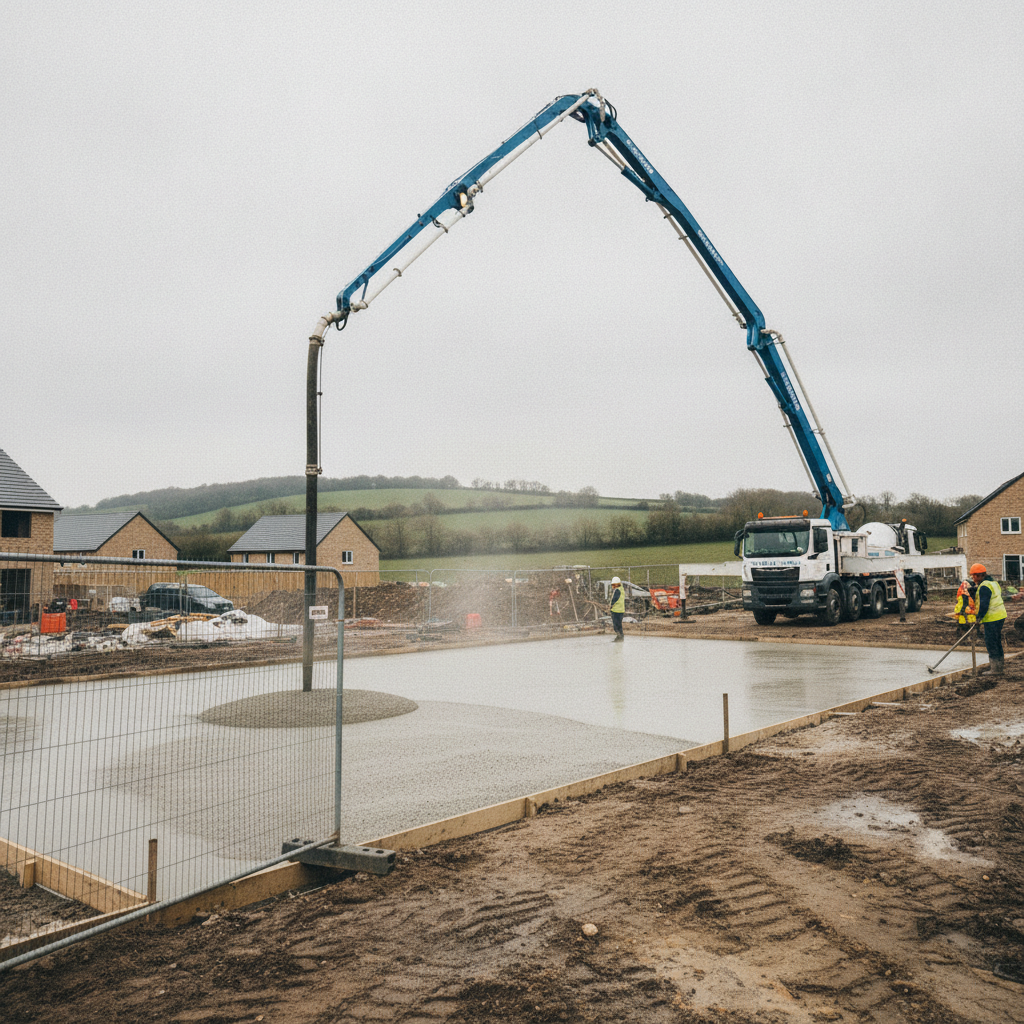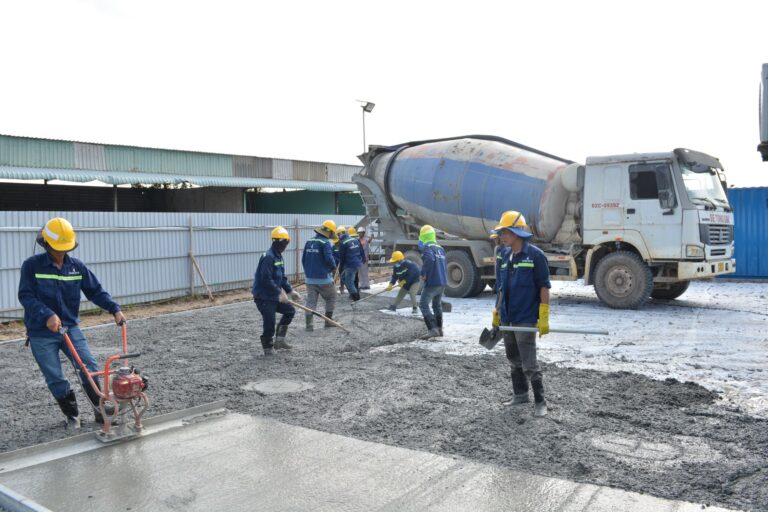
When planning a construction or renovation project, especially here in Weaverham and across Cheshire, the question of how to move concrete often arises. While wheelbarrows might seem like the traditional choice, understanding why you use a concrete pump instead of wheelbarrows is crucial for modern building. This approach offers numerous advantages that save time, effort, and ultimately, money. We at Assured Concrete Pumping Ltd are here to explain the benefits of this smart choice for your next job.
Get in touch: call +447960156967 or email chris@assuredconcretepumping.co.uk.
Why You Use a Concrete Pump Instead of Wheelbarrows
You use a concrete pump instead of wheelbarrows primarily for enhanced efficiency, safety, and superior placement quality. The traditional method of moving concrete by wheelbarrow is labour-intensive and slow, often leading to inconsistencies in the mix as it's transported across the site. This can compromise the structural integrity and finish of your concrete slab or foundation. Concrete pumping, however, delivers a continuous, controlled flow directly to where it's needed, maintaining the mix's integrity.
This method is particularly beneficial for larger projects or those with challenging access, such as back gardens, upper floors, or sites with obstacles. It minimises manual handling, reducing the physical strain on workers and speeding up the entire process considerably. For residential extensions, new builds, or even substantial groundwork in areas like Northwich, Winsford, or Knutsford, opting for a pump makes a tangible difference. Ultimately, you use a concrete pump instead of wheelbarrows to achieve a professional result with less hassle.
The Efficiency Edge: Speed and Consistency
The speed and consistency offered by concrete pumping are unparalleled when compared to manual methods. A concrete pump can move large volumes of concrete much faster than a team of individuals with wheelbarrows, drastically cutting down project timelines. This rapid delivery means your concrete is placed quickly, reducing the risk of it setting prematurely or developing cold joints, which are weak points where new concrete meets older, partially set concrete.
Beyond speed, the pump ensures a consistent flow, which is vital for maintaining the quality of the concrete mix from the moment it leaves the mixer to its final placement. This consistency helps to prevent segregation, where the aggregate separates from the cement paste, leading to a weaker, less durable finish. When you use a concrete pump instead of wheelbarrows, you are investing in a smoother, more uniform concrete pour. This is especially important for critical structural elements where strength and longevity are paramount.
Reaching the Unreachable: Access and Versatility
One of the most compelling reasons why you use a concrete pump instead of wheelbarrows is its incredible ability to access difficult areas. Whether you are pouring a foundation at the back of a property, filling a void under an existing structure, or laying a slab on an upper floor, a concrete pump can deliver the material precisely. Our equipment, operating from our base at 73a Northwich Road, Weaverham, Northwich CW8 3BD, UK, is designed to navigate tight spaces and reach over obstacles that would be impossible for wheelbarrows.
Consider the common challenges of urban or suburban sites: narrow driveways, fences, hedges, or even internal areas within a building. Concrete pumps use hoses that can be extended and manipulated, allowing for accurate placement without disturbing the surrounding environment. This versatility saves significant time and effort, eliminating the need for complex scaffolding or temporary ramps often required for manual transport. It truly makes light work of what would otherwise be a logistical nightmare.
Here are some scenarios where a concrete pump excels:
- Overcoming Obstacles: Pumping over walls, fences, and garden features.
- Reaching Distant Areas: Delivering concrete to the far corners of a large site.
- Elevated Pours: Placing concrete on first floors, basements, or raised platforms.
- Confined Spaces: Fitting hoses through doorways or small openings.
- Minimising Disruption: Reducing foot traffic and potential damage to existing landscaping.
Safety First: Reducing Risk on Site
Safety is a paramount concern on any construction site, and this is another area where you use a concrete pump instead of wheelbarrows offers clear advantages. Manual handling of heavy wheelbarrows filled with concrete poses several risks to workers. These include back injuries from lifting and pushing, trips and falls on uneven terrain, and potential strain injuries from repetitive work. The risk of splashing and skin contact with wet concrete is also higher with wheelbarrows.
By contrast, concrete pumping significantly reduces the need for manual labour in concrete transport. The pump does the heavy lifting, moving the material through a secure hose system. This minimises the number of workers directly exposed to the wet concrete and reduces the physical demands of the job. A safer site environment means fewer accidents, less downtime, and a more comfortable working experience for everyone involved. For homeowners undertaking projects, this means less worry about potential incidents on their property.
How Does Concrete Pumping Work?
Concrete pumping involves a specialised machine that draws liquid concrete from a mixer and pushes it through a series of pipes or hoses to the desired location. The process begins with the concrete being discharged from a ready-mix truck into the pump's hopper. From there, a powerful piston or rotor mechanism continuously pushes the concrete through the pipeline. The length and diameter of the hoses can be adjusted to suit the specific requirements of the job, allowing for precise and controlled delivery.
Our experienced operators manage the flow and pressure, ensuring the concrete arrives at the pour site in optimal condition, ready for finishing. This method is far more controlled and less prone to spillage than manual transport. It represents a streamlined and highly effective way to manage concrete delivery on virtually any scale.
Cost-Effectiveness in Concrete Pumping
While there's an initial outlay for hiring a concrete pump, the long-term cost-effectiveness is a significant factor in why you use a concrete pump instead of wheelbarrows. Consider the labour costs associated with moving concrete manually. You would need a larger team of workers, and they would spend considerably more time on the task, leading to higher wage bills. The extended project duration also translates to increased overheads, from equipment hire to site supervision.
A concrete pump dramatically reduces the need for a large labour force and speeds up the pour, meaning your project can be completed faster and with fewer personnel. This efficiency directly translates into savings. Furthermore, the precision of a pump minimises waste and spillage, ensuring that you get the most out of every cubic metre of concrete you order. For projects around areas like Middlewich, Sandbach, and Holmes Chapel, these efficiencies can make a real difference to the bottom line.
Ready to find out more?, get in touch via our contact page.
Choosing the Right Pump for Your Project
Selecting the appropriate concrete pump is crucial for the success of your project, and it's a decision we can help you with. There are generally two main types of concrete pumps: boom pumps and line pumps. Boom pumps, often truck-mounted, use a remote-controlled robotic arm (boom) to place concrete with extreme accuracy at height or over long distances. They are ideal for larger sites or where significant reach is required.
Line pumps, also known as ground pumps, use flexible hoses that are laid out across the ground to deliver concrete. These are perfect for smaller, more confined spaces, residential projects, or when concrete needs to be snaked through a property to a backyard. For our customers in Northwich, Weaverham, and surrounding areas, our expertise ensures we recommend the most suitable and efficient pumping solution for your specific needs, ensuring that you use a concrete pump instead of wheelbarrows effectively.
| Feature | Concrete Pump | Wheelbarrows |
|---|---|---|
| Efficiency | High speed, continuous flow, consistent mix | Slow, intermittent, prone to mix segregation |
| Access | Reaches difficult, elevated, or distant areas | Limited by terrain, obstacles, and distance |
| Labour | Minimal manual handling required | Highly labour-intensive, physically demanding |
| Safety | Significantly reduced risk of injury | Higher risk of back strain, trips, and falls |
| Finish Quality | Consistent, fewer cold joints, uniform pour | Potential for inconsistencies and weaker spots |
Frequently Asked Questions
What kind of projects benefit most from concrete pumping?
Concrete pumping is ideal for a wide range of projects, from residential foundations, driveways, and extensions to commercial slabs, basements, and multi-story buildings. Any project requiring efficient, precise, and consistent concrete placement, especially in difficult-to-access areas, will benefit significantly.
Is concrete pumping messy?
Compared to wheelbarrows, concrete pumping is generally much cleaner. The concrete is contained within hoses, minimising spills and splashes. Our operators take great care to ensure a tidy site, reducing the amount of post-pour clean-up required.
How much space do I need for a concrete pump?
The space required depends on the type of pump. Boom pumps need adequate space for the truck and to extend their boom. Line pumps are more compact and require space for the pump unit and for laying out the hoses. We can assess your site in advance to determine the best approach and ensure proper access for our equipment.
Can concrete pumps handle different types of concrete?
Yes, concrete pumps are versatile and can handle various types of concrete mixes, including standard mixes, screed, fibre-reinforced concrete, and some specialised mixes. It's always best to discuss your specific concrete requirements with us beforehand to ensure compatibility.
How far can a concrete pump reach?
The reach of a concrete pump varies significantly depending on the pump type. Boom pumps can extend many metres vertically and horizontally, while line pumps can run hoses for hundreds of metres across the ground. We will determine the optimal setup for your site from our 73a Northwich Road, Weaverham, Northwich CW8 3BD, UK location.
Have a specific question? Email us via our contact page. For any construction or renovation work where concrete is involved, the decision to you use a concrete pump instead of wheelbarrows is a clear step towards greater efficiency, safety, and a superior finish. At Assured Concrete Pumping Ltd, we pride ourselves on providing reliable, professional concrete pumping services across Weaverham, Northwich, and the wider Cheshire area. We ensure your project benefits from the latest in concrete placement technology, saving you time and effort.
Ready to get started? Call +447960156967 or email chris@assuredconcretepumping.co.uk. You'll also find us on Facebook, where we share what we've been working on.
Find Out More
Explore more of what we do:
Want more from us in your Google results?